How Many Kitchen Staff Does a Summer Camp Need?
Learn the ideal summer camp kitchen staffing ratio based on camp size, meal style, and dietary needs. Includes real examples.
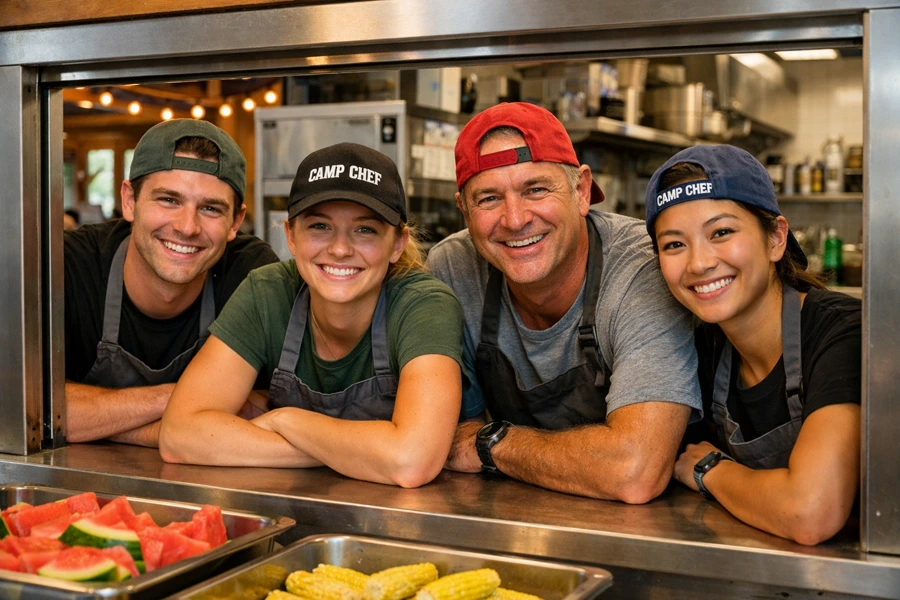
One of the biggest operational questions camp directors face is summer camp kitchen staffing and how many staff are needed to safely feed campers.
Quick Answer: How Many Kitchen Staff Does a Summer Camp Need?
Most camps need 1 kitchen staff member for every 25–35 people being fed. This includes campers, counselors, and staff.
Summer Camp Kitchen Staffing Ratios
Here’s a general guideline based on camp size.
| Camp Size | Recommended Kitchen Staff |
|---|---|
| 100 campers | 3–4 staff |
| 150 campers | 4–6 staff |
| 250 campers | 7–10 staff |
| 400 campers | 12–16 staff |
| 600 campers | 18–24 staff |
This typically includes:
- Kitchen Manager
- Chef Lead
- Production cooks
- Prep cooks
- Support Staff
- Food service or dining hall support
Camps serving multiple sessions per day or operating very large dining halls may require additional support staff.
Real Camp Kitchen Experience
At Summer Camp Cooks, we regularly manage kitchens serving 200 to over 800 campers per meal, often with dozens of special diets. In these environments, proper kitchen staffing is essential not just for speed, but for food safety and consistency.
Well-staffed kitchens allow teams to properly manage:
- allergen-safe meal preparation
- high-volume cooking
- sanitation standards
- smooth dining hall service
This ratio allows the kitchen team to handle:
- meal preparation
- food safety protocols
- special diets
- dishwashing
- inventory management
- dining hall service
How many kitchen staff does a summer camp actually need?
Too few staff can lead to long meal lines, food safety risks, and exhausted kitchen teams. Too many staff can inflate food service budgets unnecessarily.
The right number depends on several factors, including camp size, menu style, service format, and dietary requirements. In this guide, we’ll break down the typical staffing ratios used by successful camps and explain how to determine the right kitchen team for your program.
Key Factors That Affect Camp Kitchen Staffing
The number of kitchen staff your camp needs depends on more than just camper numbers. Several operational factors can significantly impact staffing requirements.
1. Number of Campers and Staff to Feed
Most camps are not just feeding campers. They are feeding:
- campers
- counselors
- administrative staff
- visiting families
- maintenance teams
A camp with 300 campers and 100 staff is really feeding 400 people per meal.
This increases kitchen workload significantly.
2. Meal Service Style
How meals are served affects how much labor is required.
Family-style service
Meals are placed on tables for campers to share.
Advantages:
- fewer servers needed
- faster dining hall flow
Disadvantages:
- more prep work in the kitchen and cleaning
- more equipment required such as serving platters, serving utensils, and warmers to hold all the food
Buffet service
Campers serve themselves.
Advantages:
- flexible portions
- popular with campers
Disadvantages:
-
requires staff for monitoring and replenishment of buffets/serving lines
3. Menu Complexity
A camp serving mostly scratch-cooked meals will need more kitchen staff than a camp using pre-prepared foods (also known as RTE and RTU).
Scratch kitchens often require:
- more prep cooks
- earlier start times
- additional dishwashing staff
However, scratch cooking usually results in better food quality and healthier meals, which is why many camps choose this approach.
Summer Camp Cooks specializes in speed-scratch cooking, which balances efficiency with fresh ingredients.
4. Special Diets and Food Allergies
Special diets dramatically increase kitchen complexity.
Many camps now accommodate:
- gluten-free diets
- dairy-free diets
- nut-free kitchens
- vegetarian or vegan meals
- severe food allergies
Each dietary restriction requires:
- separate preparation procedures
- careful ingredient checks
- communication with camp staff
- additional kitchen oversight
Camps with many special diets often need additional prep staff or dedicated allergen cooks.
5. Dishwashing and Sanitation Needs
Dishwashing is one of the most labor-intensive parts of camp food service.
A large camp can generate thousands of dishes per meal period.
Proper sanitation requires:
- dishwashing staff
- sanitation supervisors
- cleanup crews
Food safety regulations require strict cleaning protocols, which makes adequate staffing essential.
Example: Staffing a 300 Camper Camp Kitchen
Let’s look at a typical example.
A camp with:
- 300 campers
- 80 counselors and staff
Total meals served per meal:
~380 people
A typical kitchen team might include:
| Role | Staff |
|---|---|
| Kitchen Manager | 1 |
| Chef Lead | 1 |
| Production cooks | 2 |
| Prep cooks | 2 |
| Support staff | 7 |
Total kitchen team:
10–14 staff members
This allows the kitchen to operate efficiently while maintaining food safety standards.
Common Camp Kitchen Staffing Mistakes
Many camps underestimate how much labor food service requires.
Here are some common mistakes.
Understaffing the kitchen
This leads to:
- slower meal service
- poor food quality
- staff burnout
- increased food safety risks
Not accounting for special diets
Allergy-friendly kitchens require additional preparation time.
Ignoring this can lead to dangerous mistakes.
Relying too heavily on counselors for kitchen help
Some camps expect counselors to assist with meal service.
While this can help during peak periods, the kitchen should still have dedicated professional staff.
Should Camps Outsource Their Kitchen Operations?
Staffing a camp kitchen is one of the biggest operational challenges for camp directors. Recruiting seasonal kitchen staff can be difficult due to:
- short camp seasons
- housing requirements
- food safety training needs
- increasing dietary restrictions
Because of these challenges, camps typically have two main options for running a successful kitchen.
Option 1: Outsource Your Camp Kitchen
Some camps choose to partner with professional camp food service providers. Outsourcing can reduce the operational burden on camp leadership by providing a fully managed kitchen team.
Companies like Summer Camp Cooks can support camps by providing:
- experienced camp chefs
- trained seasonal kitchen teams
- menu planning and food ordering systems
- dietary accommodation management
- full kitchen operations support
This approach allows camp directors to focus on programming and camper experience while experts handle food service operations.
Option 2: Strengthen Your In-House Kitchen with Technology
For camps that prefer to run their kitchen internally, the key to success is organization and systems. Many camp kitchens struggle not because of staff numbers, but because of outdated processes.
Modern kitchen management technology like Camp Kitchen Pro helps camps streamline operations by providing tools for:
- menu planning
- recipe scaling for large groups
- food ordering and inventory tracking
- special diet management
- production planning for hundreds of campers
With the right systems in place, camps can run efficient kitchens even with smaller teams.
The Right Choice Depends on Your Camp
Both approaches can work successfully. Camps that want a fully managed solution may choose to outsource their kitchen operations, while camps that want to maintain internal control can improve efficiency by implementing better systems and technology.
The most important goal is ensuring your kitchen team has the tools, staff, and structure needed to deliver safe, consistent, and enjoyable meals for campers.
All in all
Getting summer camp kitchen staffing right ensures your kitchen runs efficiently while maintaining food safety and meal quality.
However, most camps follow a general guideline of:
1 kitchen staff member for every 25–35 people served.
With the right staffing plan in place, camps can provide meals that are:
✅safe
✅nutritious
✅efficient
✅enjoyable for campers
Well-run camp kitchens play a huge role in the overall camp experience, ensuring that campers have the energy they need to enjoy every day of camp.
Frequently Asked Questions
Question: How many kitchen staff does a camp with 200 campers need?
Answer: Most camps with around 200 campers require 5–8 kitchen staff members, depending on the complexity of the menu and meal service style.
Question: What is the role of a camp kitchen manager?
Answer: The kitchen manager or executive chef oversees:
🍽️ Menu planning
📦 Food ordering
📅 Staff scheduling
🧼 Food safety compliance
🥗 Dietary accommodations
They are responsible for the overall success of the camp’s food service program.
Question: Do summer camps need special staff for food allergies?
Answer: Camps with many food allergies often designate a special diet coordinator or allergen cook to prepare allergy-safe meals and prevent cross-contamination. Just as importantly, this role should be clearly owned by one person on the kitchen team rather than treated as an afterthought. Managing special diets requires careful attention to ingredients, preparation methods, and communication with campers and staff. When one trained team member is responsible for overseeing these meals, camps significantly reduce the risk of mistakes and ensure that campers with dietary needs are consistently served safe, appropriate food.
Question: Can camps operate kitchens with volunteer staff?
Answer: Some smaller camps rely on volunteers, but most camps require trained kitchen professionals to ensure food safety and efficient meal production.